

g
Categories
Μη κατηγοριοποιημένο

THE PROFESSION OF CIVIL ENGINEER

photo

THE 10 ESSENTIALS OF CIVIL ENGINEERING RETIREMENT

The scientific and professional field of Civil Engineering is multidisciplinary. It deals with the design, planning, construction and management of integrated and sustainable technical systems such as port, structural, transport, hydraulic, geotechnical, geotechnical, environmental protection and environmental management projects. The aim is to develop the technical and social infrastructure to improve the quality of life of the members of society.

Therefore, despite the common impression that civil engineers are mainly specialised in the construction of buildings and structural works, their field is diverse and often remote from structural works.

The term Civil Engineer was introduced after Napoleon’s wars. Until then there were only engineers from the Army Corps of Engineers (and there are still American Corp. of Engineers, Royal Engineers-UK etc.). This body has been extremely active and successful and for this reason it was decided to transfer its expertise and experience to classical academic circles. Engineers graduating from civilian universities were called “civilian” engineers (English. “civil engineer”. from the English translation civilization mechanics which means “engineers”. civilisation’), to distinguish them from the military engineers.

So the engineer is engineering. He uses his brain to find solutions.

The Civil Engineer in collaboration with the Architect and the other parts of the design team (Electrical, Mechanical etc.) should find the most appropriate and economical solutions for both the client and the building.

The spectrum covered by the science of civil engineering is wide, from the construction of a simple building to the study of the stability of a huge bridge, but also the spatial planning of an area through the creation of a proper urban planning program (drainage and stormwater management, design of roads, pedestrian walkways, pedestrian bridges, environmental study, maintenance of existing buildings, fire safety study, etc.)

The science of civil engineering is fundamentally different from that of the architect, since architecture works mainly from an aesthetic, artistic and ergonomic point of view, among other things. However, in full cooperation with the Architect, they must deliver a building or a project to the end user in a complete and ready-to-use state.

Whatever the position, the engineer (designer or contractor) must be correct, practical and professional.

They rely on his knowledge and his ability to offer them what they don’t have, his expertise and knowledge of manufacturing.

The best known occupation of Civil Engineering is Structural engineering. Civil Engineer is the scientist who deals with the design and construction of structural and technical works.

◾ It designs the load-bearing structure and the foundation of buildings but also deals with design for:

◾ Transport projects.

◾ Hydraulic works.

◾ Port and coastal engineering projects.

◾ Geotechnical and other infrastructure projects.

◾ Hydroelectric projects.

◾ Environmental engineering.

◾ Building materials.

◾ Studies the parameters, difficulties and constraints of a project, analyses the relationships between them, conceives, synthesises and designs the ways in which the project can be constructed safely and economically (decides in collaboration with the Architect, and advises the owner on the optimal way of construction e.g. concrete, wood or structural steel).

◾ Such projects are buildings (houses, offices, apartment buildings), factories, sports facilities, reservoirs, retaining walls, water towers, gantries, bridges, bridges, listed buildings, special metal structures, etc.

Categories
Μη κατηγοριοποιημένο

HOW MUCH INSURANCE THE HELMET GIVES YOU

photo

HOW MUCH INSURANCE THE HELMET GIVES YOU

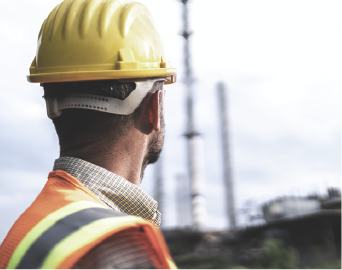
The risks for someone working (or even visiting) a construction site are multiple and pose a significant risk of injury, particularly to the head. Large loads placed at height or sharp objects sticking out, sliding surfaces, combined with momentary inattention increase such possibilities and have unforeseen consequences for the health and safety of workers.

The role of personal protective equipment (PPE) in all these cases is crucial, as long as each worker gets into the habit of using it diligently. Since risk cannot be eliminated in such places, it is very important to ensure that it is not fatal for anyone.

What dangers do work helmets protect us from in the industrial area or on a construction site?

As mentioned above, many workplaces often hide dangers that we cannot see while we are at work.

Therefore, the work uniform of a worker on the construction site is absolutely necessary to include a work helmet, which protects him from:

Object impact: dropping parts from a height or hitting protruding parts are the most common workmanship. In such cases, the safety helmet can effectively protect the entire head surface from both vertical and side impacts.

Slips on slippery surfaces: The risk of a strong impact in the event of a fall is high. In this case too, the use of a safety helmet proves to be a lifesaver, as it absorbs the shock of the fall.

Fatal accidents: In the event of a serious accident during a loading operation, such as incorrect handling of a crane vehicle, overturning of a truck trolley, etc., the chances of survival remain on the side of the worker who was wearing the work helmet at the time.

Protection from solar radiation: For outdoor workers, especially during the summer months, the safety helmet provides, among other things, additional protection against heatstroke, sunburn and fatigue. For such cases, mainly lighter work helmets are chosen, with special breathable recesses that allow air to escape, thus offering high breathability to the worker.

How important is the quality of construction materials in a work helmet?

For several years now, a number of European standards have been established according to which work helmets must be manufactured in order to provide complete protection for the worker in the event of an impact. The main and most important European standard is EN 397:2012+A1:2012.

For this reason, it is very important to pay great attention to the products selected as there are cheap imitations on the market that do not comply with the required safety standards and as a result, in case of an accident, they cannot offer the necessary protection to the worker.

Categories
Μη κατηγοριοποιημένο

RESISTANCE OF BUILDINGS TO EARTHQUAKES

photo

RESISTANCE OF BUILDINGS TO EARTHQUAKES

In Greece we have a very good anti-seismic regulation, one of the best in the world. The bad thing is that only 15% to 20% of the buildings are designed with this regulation.

We cannot limit natural phenomena, so we must respect the earthquake, prevent it and reduce its consequences. This can be done by strengthening and making the structures we live in more resilient. Then we can have not only smart-green cities but also resilient cities.

How is the seismic resistance of buildings defined? How can we tell if they are resistant or not?

The buildings all have some degree of adequacy. The question is at what level is this degree of competence that they have. For example, buildings that were built many years ago, say before 1959, were not built to code at all. In our country, let’s say, there are three periods of buildings made with the seismic regulations. The first regulation is from ’59. After the Thessaloniki earthquakes and the ’81 earthquakes in Athens, some additional provisions came in ’84 that were applied to construction from ’85 onwards, and the third period of regulations is from 1995/2000 onwards. The buildings are therefore included in these three periods. What is seismic capacity? And a building built before ’59 has a seismic capacity. It just withstands a small earthquake. A building built to the new regulations also has a seismic capacity, but can it withstand a bigger and stronger earthquake? This does not mean that new buildings are fully seismic resistant and can withstand all earthquakes. They have a level of adequacy that can withstand an earthquake. New buildings can withstand an earthquake (a design earthquake), but there is a chance that another earthquake will come from nature that will exceed the earthquake to which they were designed. What is this probability? 10% in the next 50 years. Therefore we can say that each building has a seismic capacity depending on the regulation which it was made.

Some useful tips that people should know about earthquakes and the buildings they live in.

Houses are not designed based on the Richter earthquake. If someone tells you that this house can withstand 10 Richter, then he has no idea about seismic design of structures. One of the seismic design parameters is the ground acceleration and not the Richter earthquake.

New structures are designed for some level of earthquake. There is a possibility that nature will make an earthquake and overcome the earthquake for which the structure was designed. What is this probability? 10% in the next 50 years. So new constructions are not invulnerable.

The damage that a structure may suffer after an earthquake may also be caused by other causes. For example, wear and tear on materials caused by the environment.

Finally, an earthquake is a natural phenomenon.For example, wear and tear on materials caused by the environment. Like all other natural phenomena, if it takes place in an area where there is no built environment, then there will be no losses. An earthquake becomes a natural disaster when it occurs in a built environment. We cannot limit natural phenomena, so we must respect the earthquake, prevent it and reduce its consequences. This can be done by strengthening and making the structures we live in more resilient. Then we can have not only smart-green cities but also resilient cities.

This site is registered on wpml.org as a development site.